Mountaineering Boots

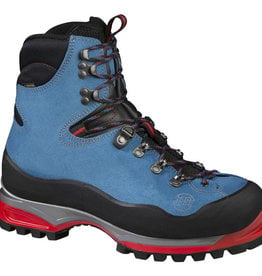
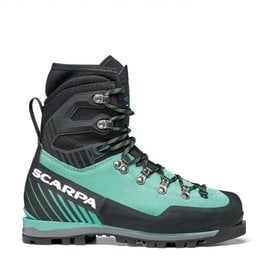
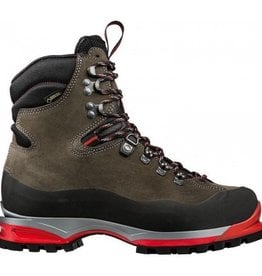
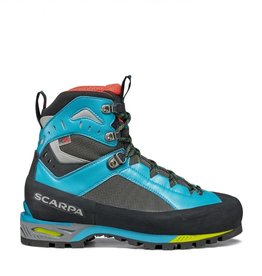
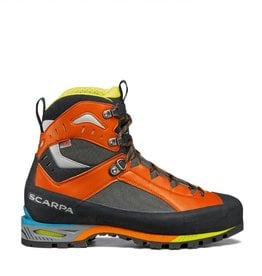
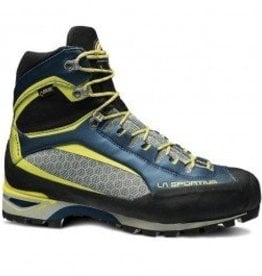
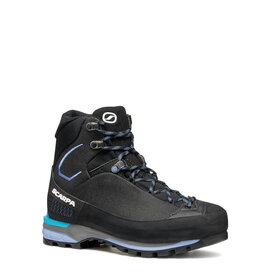
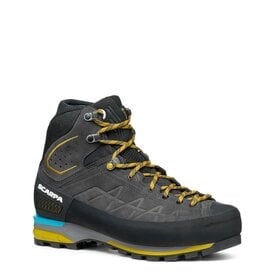
Stay supported in challenging alpine conditions with Track 'N Trail's collection of dependable mountaineering boots. Featuring women's mountaineering boots and men's mountaineering boots from trusted brands like Scarpa, La Sportiva and Hanwag, the range includes options for glacier travel, rocky approaches, steep ascents and snowy terrain.

Find technical footwear engineered for rugged protection and dependable grip, whether you are planning an alpine climb or tackling a high-altitude trek. Pair your footwear with our broader selection of mountaineering equipment to ensure you have the essential gear for long days on the mountain.
FAQs

1. Are all mountaineering boots compatible with every type of crampon?
No. Crampon compatibility depends on sole stiffness, heel and toe welts, and the exact boot and crampon systems. Some boots accept strap-on crampons, some support hybrid designs and some technical models work with automatic systems. Do not choose by category name alone. Confirm the manufacturer's compatibility for the exact boot and have the boot-crampon interface checked before relying on it in the mountains.
2. Should I choose a three-season alpine boot or a technical ice-climbing boot?
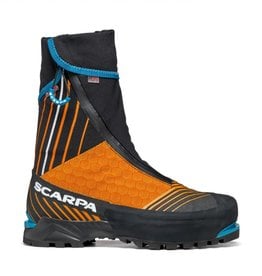
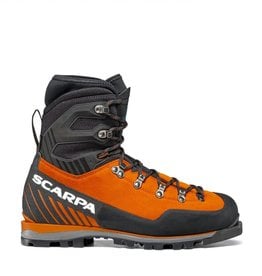
Three-season alpine boots are designed to cover ground efficiently across rock, snow and moderate alpine terrain. Technical ice and mixed-climbing boots add stiffness, warmth and climbing precision, often with more protective construction. Track 'N Trail carries lightweight three-season models, durable alpine boots and high-end ice boots such as integrated-gaiter designs. Choose for the coldest conditions and most technical climbing you realistically expect.
3. How does boot stiffness affect walking and climbing?
A stiffer platform improves edging, front-point support and crampon security on technical terrain, but it is less natural for long approaches and ordinary hiking. A lighter, more flexible alpine boot walks better and suits fast objectives, though it may provide less support on steep ice. Match stiffness to the route's technical crux and approach length instead of buying the stiffest boot available.
4. How should mountaineering boots fit with cold-weather socks?
Fit with the sock system you will use and leave enough toe room for circulation and downhill travel, while keeping the heel secure for climbing. Do not automatically size up for a very thick sock; excess volume reduces control and can create friction. Test the boot on an incline and in a climbing stance. For high-consequence objectives, professional fitting is especially valuable because shell volume and insulation vary significantly.
5. When is an integrated-gaiter mountaineering boot worth it?
An integrated-gaiter design adds weather protection and warmth while reducing the need for a separate gaiter, which is valuable for ice climbing, mixed routes and cold technical objectives. It also costs more, can feel warmer on approaches and may dry differently from a conventional leather or fabric boot. Choose it when cold and snow protection are central to the objective, not simply as a premium upgrade.
6. Can mountaineering boots replace hiking boots?
They can handle rugged approaches, but technical mountaineering boots are usually stiffer, heavier and less comfortable for ordinary trail hiking. A three-season alpine model may work for scrambling and routes that mix hiking with snow or easy climbing. For maintained trails or backpacking without technical terrain, a hiking or trekking boot is generally the better match. Buy the mountaineering boot for its compatibility and alpine performance, not general versatility.